ServicesDivorce Home Sales
Divorce Home Sales in Sutter Creek
Selling a house you own with a spouse you are separating from takes more than a good price. We represent the sale, not either side. Both of you get the same information at the same moment, and code and disclosure items get handled before a buyer turns them up.
A Sale Two People Can Both Sign Off On
A divorce sale is a normal real estate sale with two extra layers. First, both spouses on title must approve each step, usually with attorneys or a mediator involved. Second, a buyer's inspector will find any old problem, and in a divorce nobody wants to argue about who pays to fix it in the middle of escrow.
California adds a point many people miss. The family law summons carries automatic temporary restraining orders, and one of them bars either spouse from selling or transferring jointly held property unless the other agrees in writing or a judge allows it. We plan the sale around that from the first call, so nothing is signed that one side or the court has not approved.
We are not lawyers and we do not take sides. Our job is the property: pricing it on evidence, preparing honest disclosures, and closing a sale that holds up.
What We Handle in a Divorce Sale
- 01
Equal communication
Every price discussion, offer and inspection report goes to both spouses, in writing, at the same time. If you prefer, we copy each attorney or your mediator. Nobody hears about a buyer secondhand.
- 02
Building record review
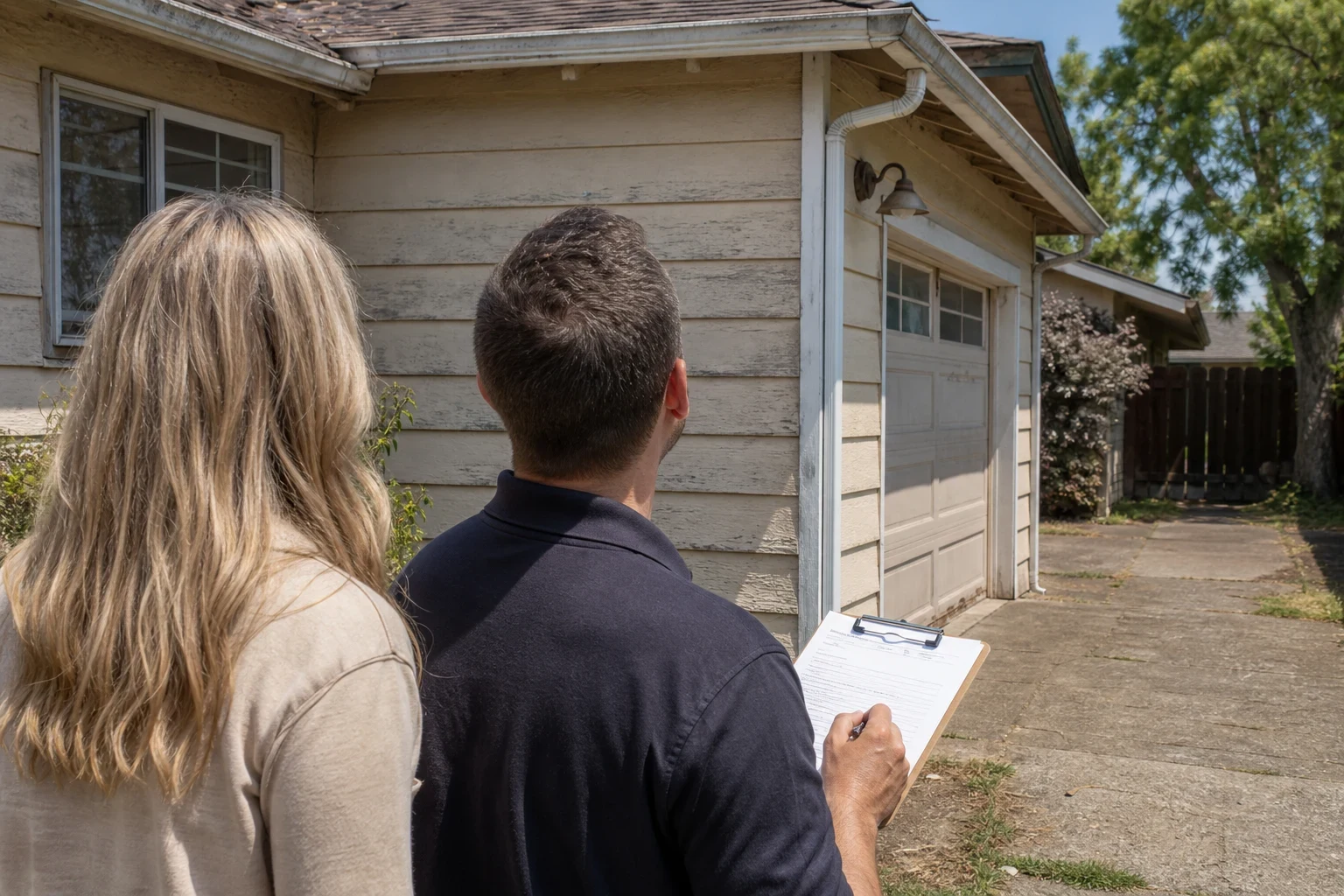
We pull the building file from the city or the Amador County building department and compare it to what is actually built. A garage converted to a bedroom, an added deck or a replaced water heater with no permit on file is far easier to address now than after a buyer's lender asks.
- 03
Point-of-sale code items
California requires certain items at sale: water heater seismic strapping, working smoke alarms, carbon monoxide alarms where there is a gas appliance or attached garage, and disclosure of non-compliant plumbing fixtures. We give you a checklist so these small items do not stall the sale.
- 04
Disclosure preparation
Both spouses complete the Transfer Disclosure Statement, and we help each of you understand what must be stated. Many foothill properties run on septic or a private well, and those systems need their own records and often an inspection.
- 05
Pricing both sides can accept
We build the price from recent comparable sales and the property's condition, and we show the full comparison to both of you. A number backed by data is easier to agree on than one spouse's hope against the other's.
- 06
Escrow coordination
We work with the escrow officer so loan payoffs are handled and net proceeds are held or split exactly as your settlement or court order directs.
Questions about Divorce Home Sales?
Call(209) 414-1542Signs a Divorce Sale Is the Right Step
Neither spouse can buy the other out
If refinancing into one name is not possible, a sale is usually the simplest way to turn shared equity into two separate amounts.
Your judgment or settlement requires a sale
When the judgment or marital settlement agreement directs that the property be sold, you need an agent who follows that document line by line.
You agree to sell but not on the price
A shared set of comparable sales and a clear condition report usually narrows that gap faster than more back-and-forth.
Some work was never signed off
Additions or conversions built without county approval can kill a buyer's loan or reopen negotiations late. Better to decide together, early, whether to legalize it, correct it or disclose it and price accordingly.
Payments are getting harder to cover
When one person has moved out and two housing costs are running, a planned sale can stop the equity from draining month by month.
How the Sale Moves From First Call to Closing
- 1
Separate or joint first conversation
We talk by phone or video, together or one at a time, whichever keeps things calm. We ask about title, any court orders and who your attorneys or mediator are.
- 2
Records and property review
We gather the building records, loan information and any septic or well reports, then review the property's condition. You both receive the same written summary of what we found.
- 3
A written plan both of you approve
The plan covers price, which code items to fix before going to market, and how decisions get made. Both signatures go on it before anything moves forward.
- 4
Offers, inspections and escrow
Offers go to both spouses together. We manage inspection responses and repair requests in writing, and escrow distributes proceeds according to your agreement or order.
What Affects the Cost of Selling
There is no single number for a divorce sale, and we will not guess one before we see the records. What you net depends on the condition of the property and how much correction work it needs. We walk both of you through each cost line by phone before you commit to anything.
- Code corrections
- Strapping a water heater or adding alarms is minor. Getting an addition permitted after the fact can mean drawn plans, fees and a county inspection, and the cost depends on what the inspector requires.
- System inspections
- Septic, well and roof inspections each carry a fee, and a failed septic report can lead to repairs buyers will expect handled or credited.
- Loan payoffs and liens
- Mortgage balances, home equity lines and any liens come out of proceeds at closing, so they shape what each spouse receives.
- Escrow, title and timing
- Escrow and title fees are standard, but a long delay while spouses disagree means more months of payments, insurance and upkeep before the sale closes.
Divorce Sale Questions
Does each of us need to sign?
When both names are on title, yes. Each of you signs the agreement with us, the acceptance of any offer and the closing documents. If a judge has ordered the sale or authorized one spouse to sign alone, we follow that order and escrow reviews it.
Who do you actually work for?
We represent the sellers, which means both of you equally. We do not share one spouse's private comments with the other, and every decision about the sale goes to both of you at once.
What if one of us changes our mind about selling?
You can cancel our agreement to market the property at any time before it goes under contract, and the exit is simple. Once a buyer is in contract, cancellation depends on the contract terms, so we talk that through before you accept any offer.
Can one of us keep living there during the sale?
Yes, that is common. We set clear rules in writing for access, buyer visits and upkeep so the spouse living there is not caught off guard and the property stays ready.
There's a room that was never permitted. Do we have to fix it?
Not always, but it must be disclosed. Some lenders will not finance a property with living space built without approval, so we compare the cost of legalizing it against the price effect of selling it disclosed, and both of you decide.
Do you give legal advice on dividing proceeds?
No. How the equity is split is a matter for your attorneys, mediator or the court. We make sure escrow has the instructions it needs and carries them out exactly.
Start With One Clear Conversation
Tell us where things stand with the property and any court orders. We will explain the code, disclosure and timing questions, and what both of you would need to decide next.